
News and views
News and views
The challenge:
This clinical-stage biopharmaceutical company’s chemistry engine combined in-house medicinal chemistry design with external synthesis capabilities. It was critical for them to have a robust process for tracking the design cycle (Design-Make-Test-Analyze) to assure expedient execution and quality decision making. A specific technical challenge, common to many institutions, is unambiguous tracking of synthetic targets across multiple projects and partners. Issues may and do arise from keeping track of the target status, changes in the target priority, and other synthetic queue modifications.
The solution:
While solutions to these common problems exist at large pharma companies, and are typically proprietary, the selection of tools for smaller biotech companies is limited.
“We heard about chemTraX from one of our partners and were excited to give it a try. It turned out to be a tool which met many of our needs: unambiguous tracking of synthetic targets across multiple projects/CRO partners, flexible customization to meet our project objectives, and ease of implementation. Among other benefits, it should be mentioned that the implementation team were very attentive and responsive to our needs. Robust control of access privileges for CRO partners was implemented natively within the application."
Director of Chemistry, clinical-stage biopharmaceutical company
The results:
The company now has an accessible and unambiguous system for synthetic target tracking which eliminates target duplication and ambiguity, greatly simplifies management of multiple chemistry CRO partners, and provides an up-to-date status of the synthetic queue.
“We are excited about the prospect of further integration of this tool in our chemistry workflow.”
Director of Chemistry, clinical-stage biopharmaceutical company
A San Francisco-based biotech shares their experiences of evaluation, deployment and use of iTraX™ Chemistry for collaboration and sharing of compound information.
What were the pain points which led you to consider iTraX Chemistry?
We had a variety of pain points that needed addressing around communication and sharing compounds both internally and externally to third party CROs for chemical synthesis. For every compound that needed external synthesis, there were excel files, PowerPoints, emails and SharePoint sites to shuttle the required information- taking hours of the scientists’ time on low value-added tasks.
The decision to adopt
iTraX Chemistry
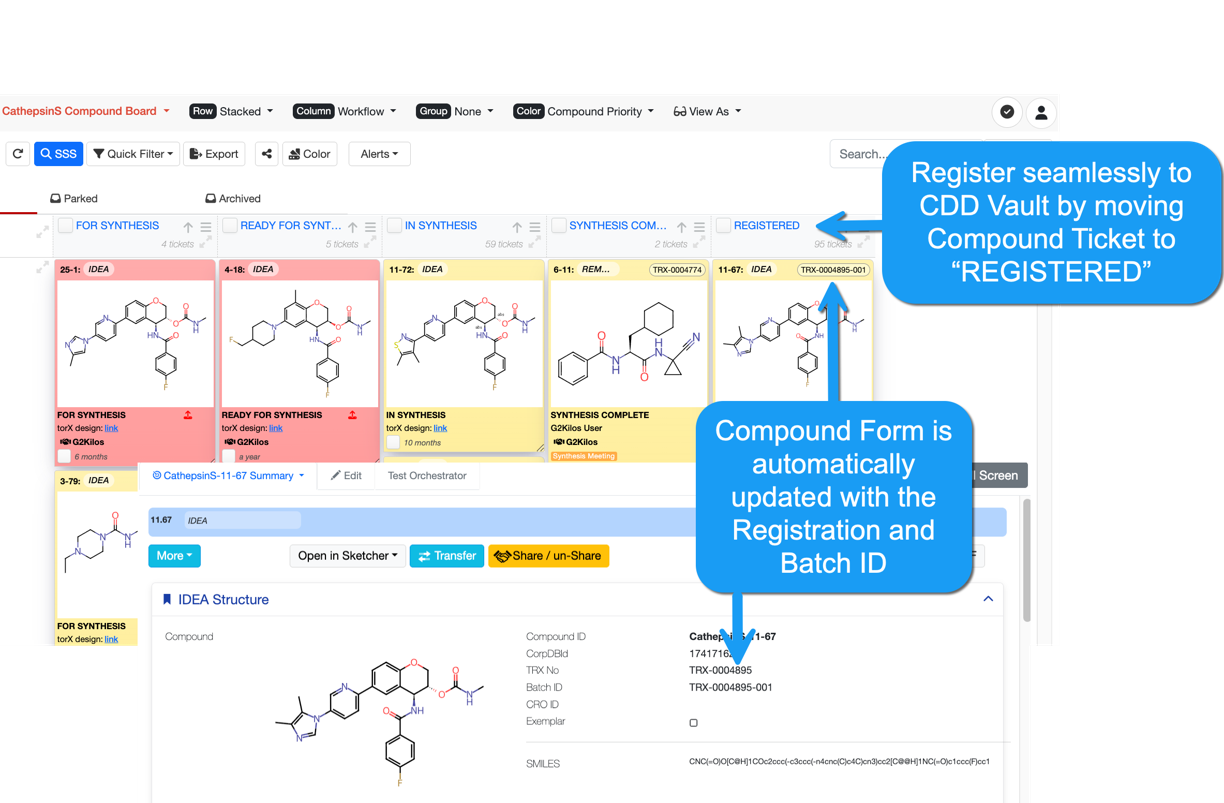
was to streamline communication and add auto-registration of samples via an API connection to existing registration systems (figure 1.)

Figure 1. Integration with CDD Vault for automatic registration
Were you considering other platforms as well as iTraX?
Yes. We received a recommendation from
Collaborative Drug Discovery (CDD)
and were also considering two other LIMS platforms.
How was the evaluation experience?
In the evaluation, iTraX Chemistry was scored against the two larger LIMS platforms. Ultimately, the unique and perfect fit of functionality allowed us to decide to add this into the LIMS offerings since this was a missing function of those bigger platforms.
What were the key features which convinced you to adopt iTraX?
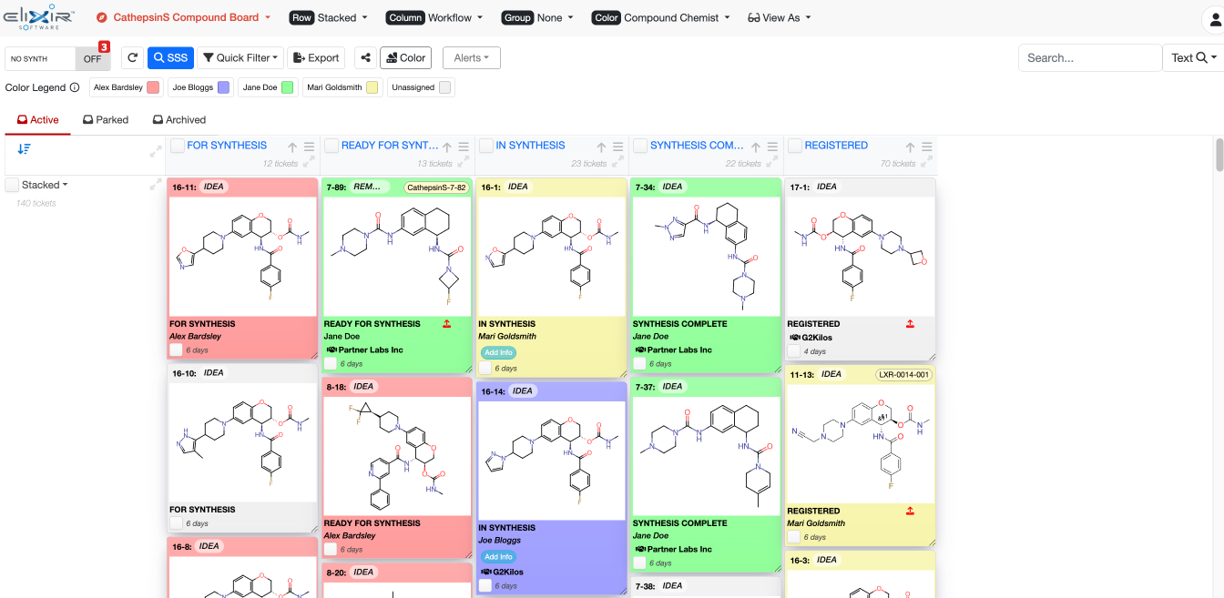
The key features were native chemistry drawing functionality paired with the Kanban board (figure 2) allowing attachments and QC purity data. It was simple, effective and met the need to work with our CROs.

Figure 2. The intuitive Kanban of iTraX Chemistry
How was the deployment experience?
The deployment experience was the best I’ve ever had in my professional career! The team were responsive, adaptive and accommodating. The deployment was quick, effective, and any UAT (user acceptance testing) updates were done very quickly.
In software deployment, there is a term called the ‘trough of disillusionment’ which we never hit. Instead, we got to the ‘plateau of productivity’ quicker than anticipated, which exceeded our expectations.
What benefits do you feel that iTraX brought to your workflow?
There was a huge time saving in back-and-forth communications. I think we saved two hours per week per scientist for a total saving of 40hrs/week or one full time equivalent (FTE), plus another four to six hours per week per department head on coordination, equaling almost another FTE. The back of the napkin math for us on ROI (return on investment) was a $60K investment/year for $500K in time savings for scientists to do more high value work.
How do you feel it performed against your expectations?
The team exceeded expectations while working with us to fill the Third-Party Risk Management Survey and to make improvements in a timely manner. We have one of the most rigorous security reviews in the industry. This survey consisted of 160+ industry standard questions that uncovered security improvements for the platform.
By prioritizing these non-user facing security features, the team worked collaboratively to make the biotech industry as a whole more infosec secure. And we think that these questions can hopefully be re-used for prospective customers to reduce onboarding time for both vendor and customers.

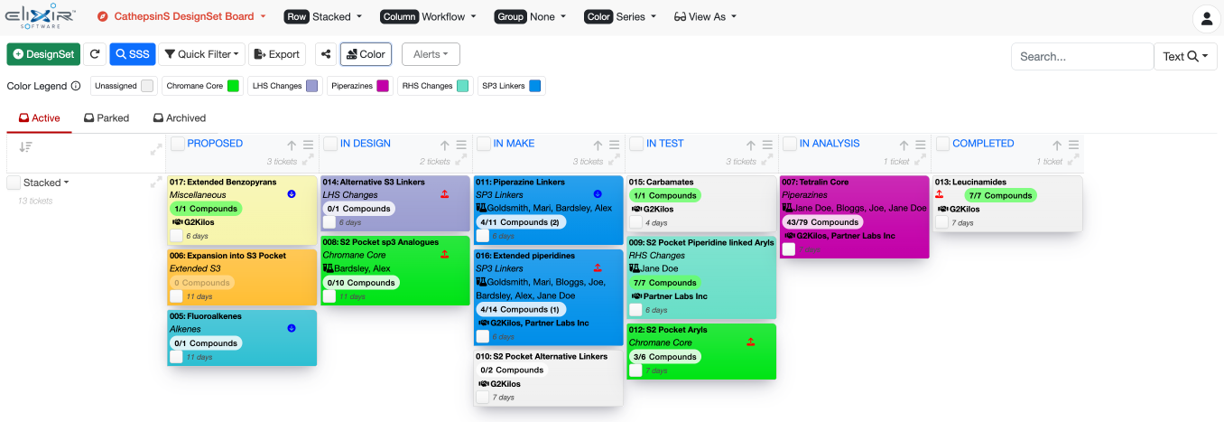
Figure 3.
Coordinating synthesis with CROs
How would you summarize your experience?
I highly enjoyed working with the team. For anyone working on chemistry and coordinating synthesis with CROs (figure 3), this software is a must have!
“The back of the napkin math for us on ROI (return on investment) was a $60K investment/year for $500K in time savings for scientists to do more high value work.”
R&D IT Manager, San Francisco-based Biotech
More news and views