News and views
News and views
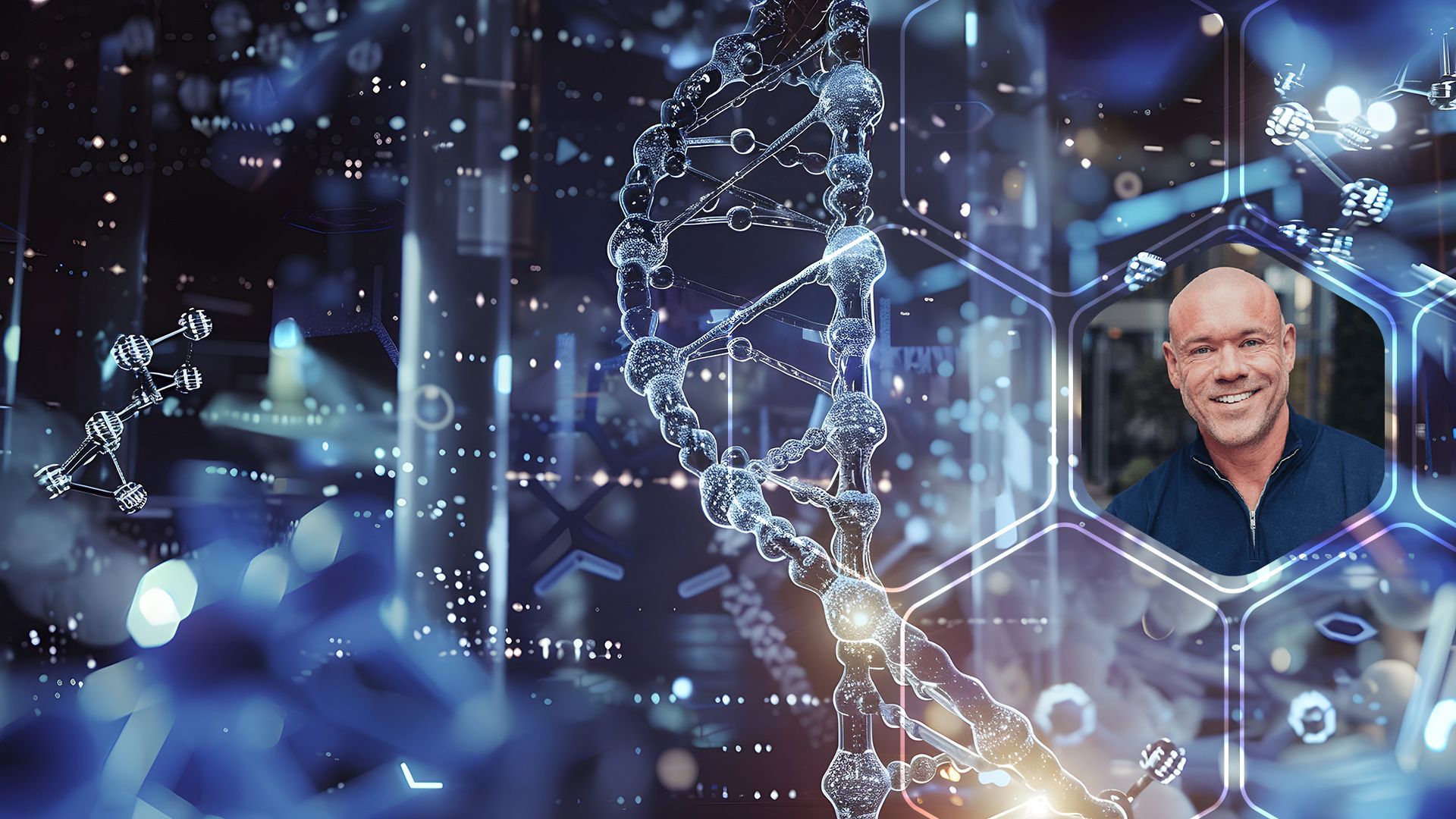
Elixir Software Limited is delighted to announce the appointment of Nicola Dennis to the newly created role of Head of Global Sales.
“This exciting new appointment marks a significant point in Elixir’s growth and our commitment to our global clients accessing iTraX solutions to improve their workflows and collaboration. ” said David Bardsley, Commercial Director of Elixir.
“I am pleased to be joining Elixir Software at such an exciting time in their growth strategy. My previous knowledge with iTraX, as part of the Torx DMTA solution, makes me positive about the wider use of the application across the industry and confident in the value we provide to our customers and their research . ” said Nicola.
Nicola has extensive industry knowledge in SaaS solutions for the scientific market. Prior to Elixir, Nicola gained commercial experience at Torx Software and the Royal Society of Chemistry, as well as industry experience at AstraZeneca and GlaxoSmithKline. Nicola has a 1st Class Master’s Degree in Medicinal Chemistry from the University of Leeds.

In laboratories around the world, the way science gets done is changing fast. It’s no longer just about better instruments, faster automation, or generating more data.
The real shift is happening at a deeper level: how data, workflows, systems and intelligence come together to shape discovery itself.
As Lab of the Future programmes gain momentum - from global initiatives like PRISME to major industry gatherings such as Lab of the Future USA - one thing is becoming increasingly clear. The Lab of the Future isn’t defined by any single technology. It’s defined by how everything works together.
What Do We Really Mean by “Lab of the Future”?
The Lab of the Future is often described as automated, digital or AI-enabled. All of those are true, but on their own they’re incomplete.
At its heart, the Lab of the Future is a connected environment where data flows smoothly from experimental design, through execution and analysis, into decision-making. It’s a place where scientists spend less time managing tools and chasing updates, and more time doing science.
Insight isn’t something assembled later in reports or slide decks. It emerges naturally as work progresses. Getting there requires a shift away from isolated systems and manual hand-offs, toward a shared digital backbone - one that connects people, instruments and software into a single, working environment.
Connectivity Alone Isn’t Enough
Most modern labs already generate huge volumes of digital data. Instruments are increasingly connected and many organisations have invested heavily in ELNs, LIMS and data platforms. Yet fragmentation remains one of the biggest barriers to progress.
Data still lives in silos, context is lost between systems and workflows are stitched together using email, spreadsheets and meetings. Decisions are slowed down not because information doesn’t exist, but because it’s hard to interpret, trust and act on.
True digital connectivity goes beyond integration for integration’s sake. It means data is captured once, enriched with scientific context, and made available wherever it’s needed. It means experiments can be followed end to end - not just within individual tools - and teams across disciplines can work from a shared understanding of what’s happening and why.
Automation Helps Until It Gets Complicated
Automation and robotics are already transforming laboratory operations. Liquid handling, sample tracking and automated scheduling have removed large amounts of repetitive manual work. But automation alone doesn’t solve the coordination problem.
As labs automate more steps, workflows often become more complex, not less. Multiple systems need to act in sequence, exceptions need to be managed, priorities change and experiments evolve as results come in. Without orchestration, automation risks becoming just another layer of complexity.
What’s increasingly needed is a way to coordinate work across systems - ensuring the right actions happen at the right time, and providing clear, real-time visibility into what’s running, what’s complete and what needs attention.
Where AI Fits - and Where It Doesn’t
Artificial intelligence features heavily in Lab of the Future conversations and for good reason. But AI only delivers real value when the foundations are in place.
AI depends on high-quality, well-contextualised data. It needs to understand not just results, but experimental intent, conditions, decisions and outcomes. Without that context, even the most advanced models struggle to produce meaningful insight.
When those foundations do exist, AI becomes genuinely transformative. It can highlight patterns across experiments, suggest next-best actions, optimise workflows and help scientists explore a much wider experimental space.
This is where the idea of agentic AI begins to emerge. Not AI as a standalone analytics tool, but intelligence embedded directly into workflows. Systems that can observe what’s happening, reason over data and context, and suggest or take action within defined boundaries. In effect, intelligent digital lab partners that support human decision-making rather than replace it.
Where iTraX Fits Into the Lab of the Future
As laboratories become more connected and data-rich, one challenge comes up again and again - turning all of that activity into something scientists can actually use.
Data is everywhere - in instruments, ELNs, LIMS, spreadsheets and emails - but it’s rarely all in one place. Understanding what’s happening across an experiment, a project or a portfolio often still means chasing updates, pulling reports together and filling in gaps by hand.
This is where iTraX fits into the Lab of the Future. Rather than adding another system for teams to manage, iTraX sits across existing tools and workflows, helping teams keep track of work as it happens. It brings together information from different systems so scientists and managers can see, in one place, what’s being worked on, what’s finished and what needs attention next.
Instead of piecing together updates after the fact, teams get a live view of their experiments and studies as they progress. Scientists can focus on the work itself, while operational leaders and R&D managers can make decisions based on what’s happening now - not what was true weeks ago.
That shared visibility also makes collaboration much easier. Everyone is working from the same information, with the same context, whether they’re in the same lab, a different site, or an external partner organisation. Fewer emails, fewer misunderstandings, and far less time spent reconciling different versions of the truth.
In practical terms, iTraX helps labs move from managing work reactively to running it proactively. It doesn’t just support the Digital Lab of the Future - it helps make it workable day to day.
Competitive Advantage
The organisations leading the way in Lab of the Future programmes aren’t chasing technology trends for their own sake. They’re focused on outcomes: faster time to insight, greater reproducibility, better use of scientific talent, stronger collaboration across disciplines and geographies and, ultimately, better decisions made earlier.
What we’re seeing is a shift away from viewing digital transformation as an IT initiative, and toward recognising it as a core scientific capability. Labs that get this right aren’t just more efficient - they’re more adaptable, more scalable, and better equipped to move promising drug candidates into trials - and ultimately to patients - faster.
Looking Ahead
The Lab of the Future is built incrementally, through thoughtful investment in connectivity, orchestration and intelligence. With iTraX, our role is to support that journey in a pragmatic way - helping labs connect today’s systems while laying the groundwork for tomorrow’s AI-driven workflows.
As we head into Lab of the Future USA this March, we’re looking forward to sharing what we’ve learned so far, hearing directly from customers and peers and learning from others who are tackling the same challenges. Progress in this space doesn’t come from any one company or technology - it comes from learning together and building better ways of working, step by step.
More news and views