News and views
News and views
Elixir Software Limited is delighted to announce the appointment of Nicola Dennis to the newly created role of Head of Global Sales.
“This exciting new appointment marks a significant point in Elixir’s growth and our commitment to our global clients accessing iTraX solutions to improve their workflows and collaboration. ” said David Bardsley, Commercial Director of Elixir.
“I am pleased to be joining Elixir Software at such an exciting time in their growth strategy. My previous knowledge with iTraX, as part of the Torx DMTA solution, makes me positive about the wider use of the application across the industry and confident in the value we provide to our customers and their research . ” said Nicola.
Nicola has extensive industry knowledge in SaaS solutions for the scientific market. Prior to Elixir, Nicola gained commercial experience at Torx Software and the Royal Society of Chemistry, as well as industry experience at AstraZeneca and GlaxoSmithKline. Nicola has a 1st Class Master’s Degree in Medicinal Chemistry from the University of Leeds.
Introduction
Early-stage biotech’s are under pressure from day one: small teams, ambitious timelines, external partners, tight budgets - and the constant need to generate high-quality data that stands up to investor scrutiny.
Across multiple discussions with some of our small-molecule discovery-stage organizations, a clear pattern emerged: the biggest barriers to progress faced by these businesses were not scientific, but operational.
Here we bring together insights from several biotech’s who have adopted iTraX™ Chemistry to streamline their synthesis coordination, improve collaboration with CRO’s and other external partners, and build scalable infrastructure from the start.
The Hidden Cost of Disconnected Workflows
Before adopting a coordinated system, teams described a very similar picture:
- Compound requests scattered across Excel files
- PowerPoints created for every CRO batch
- Multiple email chains and communications channels
- SharePoint folders duplicating the same information
Furthermore, one team told us that preparing a single external synthesis request could take hours of a scientist’s time. Similarly, preparing slide decks for review meetings takes even more precious time that should be spent designing molecules, not formatting slides!
For early-stage companies in particular, this inefficiency adds up very quickly. When every hour matters, fragmented workflows quickly drain productivity- and research budgets.
The Importance of Infrastructure From Day One
Several users have shared the same realisation, that delaying infrastructure is a false economy. Early teams often have no internal IT support, no custom servers and no desire for tools which require complex configuration. They need tools that are:
- Hosted and maintained externally
- Intuitive enough to require no training
- Flexible enough to grow with the science
- Robust and secure, to support external partners
- Ensure full compliance and traceability
One chemistry leader described their approach as “a deliberate build from day one”, ensuring that every idea, design and data point was captured electronically and accessible for future due diligence. iTraX became a core part of that foundation.
The ROI that’s Easy to Miss
Something we hear from a lot of discovery leads is just how much time their teams spend getting ready for update meetings.
Pulling data from spreadsheets and emails, chasing CRO partners for the latest status, and digging through old slide decks to remember what’s already been tried. It all eats into hours that should be spent on actual science. One biotech quantified the impact of streamlining their chemistry workflow:
- 2 hours/week saved per scientist
- 40 hours/week saved across the team
- 4–6 hours/week saved for department heads
Their approximate calculation showed a modest annual investment returning hundreds of thousands of dollars in time savings - simply by removing low-value administrative work.
This is the ROI that rarely appears in procurement spreadsheets but makes a huge difference to scientific output.


CRO Collaboration as a Competitive Advantage
The CRO landscape has changed dramatically over the years. Many biotech’s now operate with:
- No internal chemistry
- One CRO handling synthesis
- Another CRO running biology
- Consultants contributing design ideas
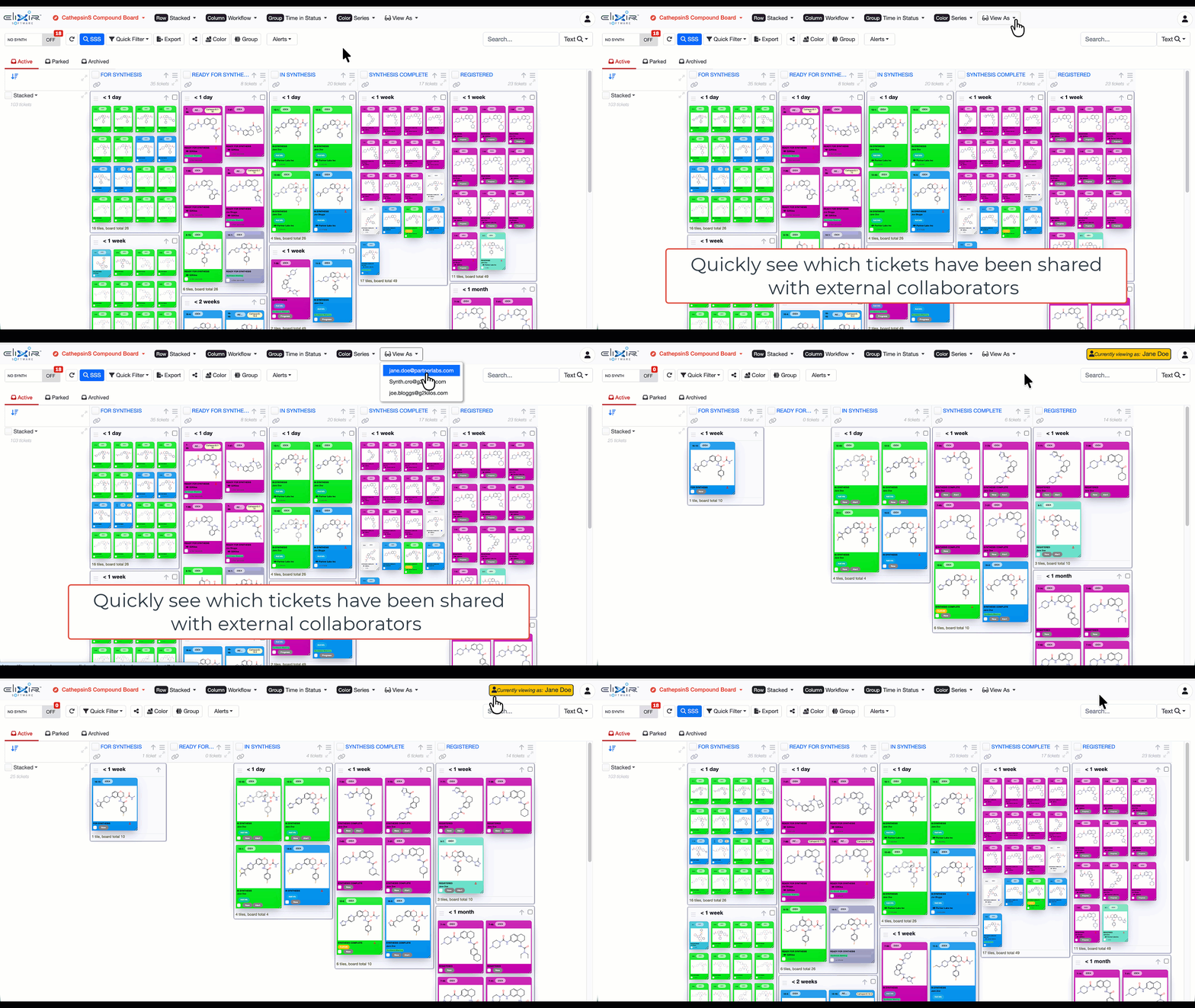
Without a shared system, this becomes extremely difficult to manage - and even more challenging to track. Teams told us that having iTraX as a single “source of truth” for compound design, synthesis, data and communication transformed how they worked with external partners (Figure 1). It also strengthens their position with investors, who can see a clear, organized and fully auditable workflow.

Figure 1: Collaborating with external partners using iTraX
Deployment Without the Pain
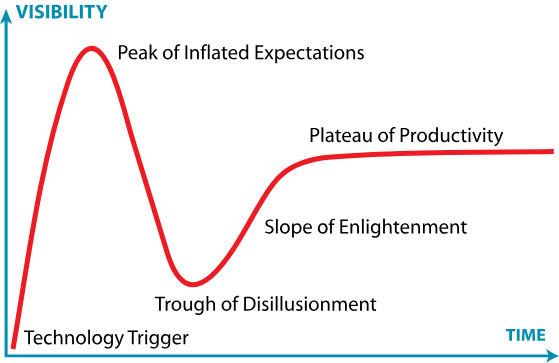
Implementation of new software technologies is often one of the real pain points experienced by both biotech’s and large pharma. The
Gartner Hype Cycle
(Figure 2) describes how new technologies progress from a peak of inflated expectations, down into a period of disappointment, and then onward to a stable plateau where they provide real, proven value.

Figure 2: The Gartner Hype Cycle
The teams we spoke to describe a very different experience with iTraX. One customer summed up their experience by saying, “The deployment was quick, effective, and any UAT updates were done very quickly. We never hit the ‘trough of disillusionment’ and instead reached the ‘plateau of productivity’ quicker than anticipated, which exceeded our expectations.”
One biotech called their deployment “the best of my professional career”, highlighting:
- Fast setup
- Simple integration with existing IT ecosystem
- Responsive updates
- Smooth UAT
- No training required for CRO partner
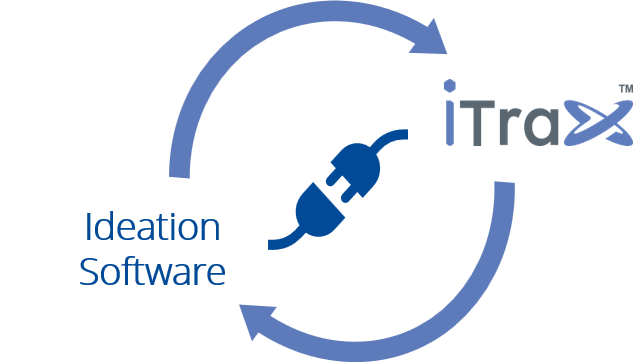
Another team said their external collaborators picked up the system in minutes. When deployment is smooth, adoption becomes straightforward, and the benefits are experienced very quickly. Using modern, secure APIs, iTraX connects seamlessly into existing IT landscapes, becoming the digital glue between R&D systems, instruments and external partners.
Conclusion
For modern biotechs, the tools you choose really matter. You need systems that cut manual overhead, make it easy to work with partners, and actually scale with the science, not get in the way. And whatever you add has to plug into the enterprise stack you already have, while keeping
data secure and compliant, structured and shareable.

iTraX adds a connective layer without forcing a big rebuild. Through a secure API it integrates with your existing LIMS, ELN, design tools, registration systems and analytical databases. It also connects safely to CROs and other external collaborators, so data can move between them automatically as projects progress.
When workflows stop leaking time, discovery chemistry speeds up. iTraX is built to enable that shift, giving scientists more space to think, design and deliver the breakthroughs that matter.
“The impact of using iTraX is very real, and it’s across all of our customers. They report very clear ROI in terms of FTEs and the amount of time saved.”
Dr Paul Faulder, CEO & Co-Founder, Elixir Software Ltd
More news and views